Back to School Sublimation Clipart: Practical Uses, Format Considerations, and When It Fits Your Creative Workflow
Back to School Sublimation Clipart refers to digital design elements—typically school-themed icons, phrases, motifs, and illustrations—optimized for sublimation printing. These files are created with clean vector-inspired outlines, high-contrast edges, and transparent backgrounds, making them suitable for heat-transfer applications on polyester-rich fabrics, coated mugs, aluminum signs, and other sublimation-friendly substrates. Unlike general-purpose clipart or print-ready SVGs, Back to School Sublimation Clipart prioritizes color separation readiness, minimal gradient reliance, and sharp 300 DPI raster fidelity—especially important when working with dye-sub printers that translate RGB data into permanent, vibrant transfers.
How This Collection Differs From Other School-Themed Design Resources
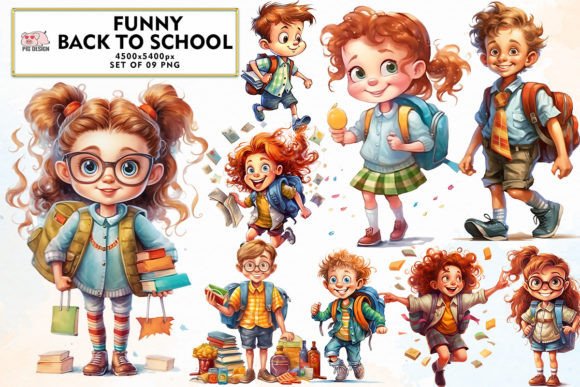
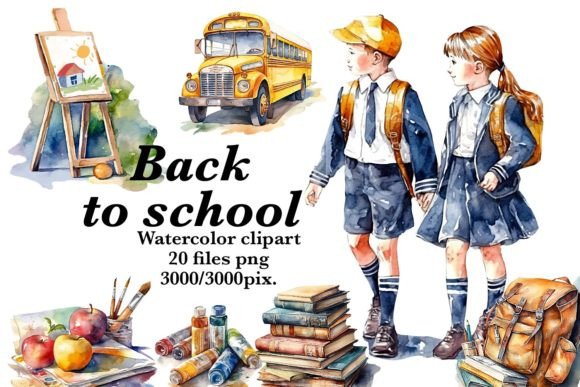
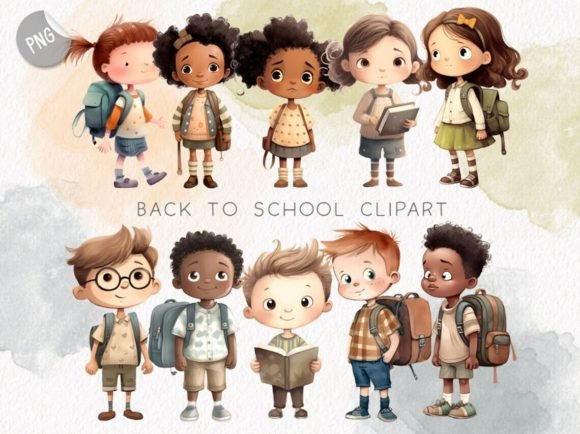
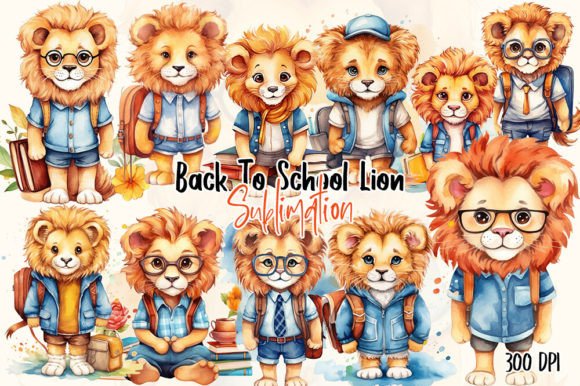
This particular set—titled Back to School Sublimation Clipart Creative Watercolor Clipart Daily Upload in My Store—stands out due to its hybrid aesthetic: it merges the precision required for sublimation with soft, expressive watercolor textures. That’s not common. Most sublimation-optimized clipart leans toward bold line art, flat-color icons, or distressed retro fonts—all reliable for transfer clarity but less suited for projects aiming for organic, hand-painted warmth. In contrast, this collection uses subtle grain, gentle pigment bleed, and layered washes while maintaining edge definition where needed (e.g., around letterforms or object silhouettes). The result is a middle ground: more nuanced than standard clipart, yet still technically viable for sublimation without heavy post-processing.
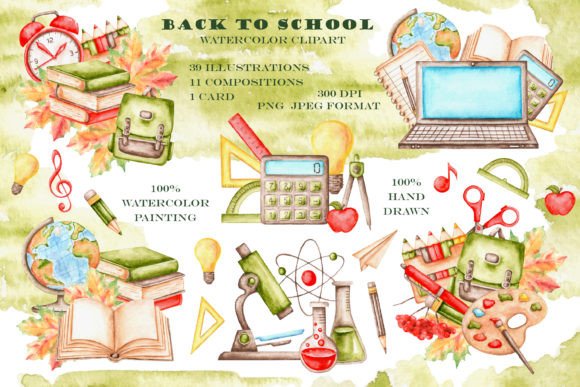
Compared to full vector bundles (like AI or EPS files), these PNGs offer immediate usability across platforms—no need for vector editing software or knowledge of path manipulation. Compared to free or low-cost clipart sites, this set avoids overused tropes (e.g., generic apples, chalkboards with cursive “ABC”) and instead features cohesive seasonal variations: backpacks with textured fabric overlays, pencils rendered with visible wood grain, and notebooks showing faint ruled lines—not just flat shapes. That consistency supports brand continuity if you’re producing a series of back-to-school merchandise.
Practical Applications—and Where Limitations Emerge
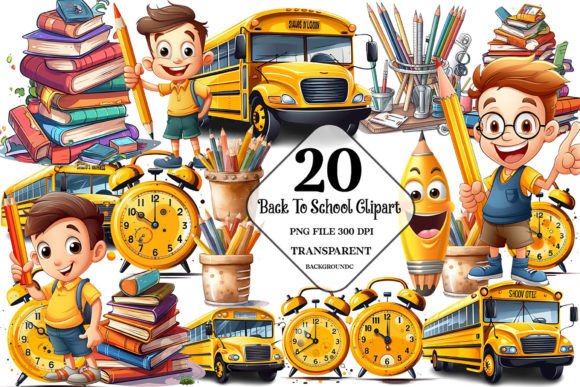
The included 20 PNG files at 300 DPI support a range of physical outputs:
- T-shirts and apparel: Works well on light-colored polyester blends or performance fabrics. Avoid ultra-heavy cotton unless using a poly-cotton blend with ≥65% polyester content—sublimation requires polymer coating or fiber composition to bond dye properly.
- Home decor and palette signs: Aluminum or MDF boards with sublimation coating accept these designs cleanly. Watercolor texture adds visual interest at larger scales (e.g., 8" × 10" or bigger), though fine details may soften slightly at very small sizes (<2 inches).
- Tumblers and drinkware: Coated stainless steel tumblers respond well—especially when designs avoid thin internal strokes or tightly spaced text, which can blur during the wrap-and-heat process.
- Stickers and stationery: Less ideal here. While PNGs can be printed on vinyl or sticker paper, sublimation-specific optimization doesn’t improve adhesive durability or cut-line accuracy. For die-cut stickers, vector-based versions would be preferable.
- Embroidery and wall art: Not directly usable. Embroidery requires digitized stitch files (.dst, .pes); wall art prints benefit from higher-resolution TIFFs or vector scalability for large-format framing. These PNGs serve best as starting references—not final production assets—for those workflows.
Format Tradeoffs: Why PNG at 300 DPI Is Both Strength and Constraint
Using PNG format delivers transparency and device-agnostic compatibility—no licensing hurdles, no proprietary software lock-in. That’s valuable for crafters using Cricut Design Space, Silhouette Studio, or Canva alongside dedicated sublimation RIP software. But PNGs are raster-only: they don’t scale infinitely. Enlarging beyond original dimensions risks pixelation, especially noticeable in watercolor textures where soft edges rely on precise anti-aliasing. A 4" × 4" design printed at 12" × 12" may show subtle artifacting along blended zones—less problematic for casual home decor, more noticeable in professional retail signage.
Compare this to vector-based alternatives: scalable, editable, and resolution-independent. However, vectors require conversion steps before sublimation (often exporting to high-res PNG or TIFF anyway) and demand familiarity with anchor points, paths, and color separation tools. For someone managing multiple product lines weekly—say, rotating tumbler designs for an Etsy shop—the immediacy of ready-to-use PNGs often outweighs the long-term flexibility of vectors.
When Back to School Sublimation Clipart Is the Right Fit
This collection suits creators who prioritize speed, thematic cohesion, and tactile visual appeal over absolute scalability or multi-platform reuse. If your workflow involves daily uploads—like the “Daily Upload in My Store” description suggests—you likely value consistent tone and quick turnaround over granular customization. Teachers selling classroom-themed merch, small-batch crafters launching seasonal collections, or educators designing custom learning materials all benefit from designs that feel intentional rather than generic.
It’s also appropriate when your audience responds to warmth and approachability. Watercolor aesthetics convey creativity, growth, and individuality—qualities that resonate with parents choosing personalized first-day-of-school items or students selecting gear that reflects personal style rather than institutional branding.
When You Might Choose Another Option
If your primary output is embroidery, screen-printed cotton tees, or large-scale murals, this set won’t replace specialized assets. Embroidery demands stitch files with underlay logic and density control; screen printing benefits from vector paths and Pantone-mapped spot colors; murals require 150+ DPI at final print size—something a 20-file PNG pack may not guarantee across all pieces.
Similarly, if you rely heavily on automated resizing tools (e.g., AI upscalers or batch resamplers), be aware that watercolor textures don’t always upscale predictably. Grain and pigment variation can become exaggerated or muddy. In those cases, flatter, more graphic-oriented sublimation clipart—or layered PSD files with editable texture overlays—may give you more control.
Realistic Use Case Comparison
Imagine two designers preparing back-to-school product lines:
- A small business owner launching a limited-run tumbler collection targets teachers and homeschool families. They choose this Back to School Sublimation Clipart set because the watercolor look differentiates their products from mass-market competitors, and the PNGs integrate smoothly into their existing sublimation workflow. They pair each design with a short, encouraging phrase (“You’ve Got This,” “First Day Magic”) and use consistent font overlays—keeping everything within their design tool’s capabilities.
- A community education nonprofit creating reusable classroom posters needs durability, readability at 3 feet, and accessibility compliance (e.g., sufficient contrast, scalable text). They opt for vector-based educational icon sets instead—customizable, WCAG-aligned, and exportable to both print and digital formats. The watercolor softness here would compromise legibility and longevity.
Neither choice is objectively better—it depends on context, audience, and technical constraints.
Making an Informed Decision
Ask yourself: What’s my dominant output medium? How much time do I have for prep versus execution? Does my audience connect with handcrafted warmth—or clean, functional clarity? Back to School Sublimation Clipart excels when those answers align with immediacy, thematic resonance, and sublimation-specific fidelity. It’s not a universal solution—but for focused, seasonal, or small-batch creative work, it offers a thoughtful balance of practicality and personality.