Back to School, Watercolor Clipart: A Practical Guide for Educators and Creative Professionals
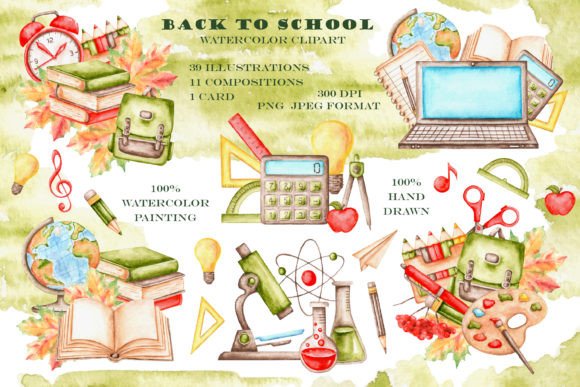
Back to School, Watercolor Clipart is a curated digital asset collection designed specifically for educators, crafters, small-business owners, and designers who need versatile, high-resolution school-themed graphics. Unlike generic clipart packs or vector-based illustrations, this set emphasizes soft, hand-painted aesthetics—achieved through authentic watercolor textures and subtle pigment variation. Each element carries the organic imperfections of real water media: gentle blooms, soft edges, and translucent layering. That visual authenticity makes it especially effective for projects where warmth, approachability, and tactile charm matter.
What Sets This Watercolor Clipart Apart
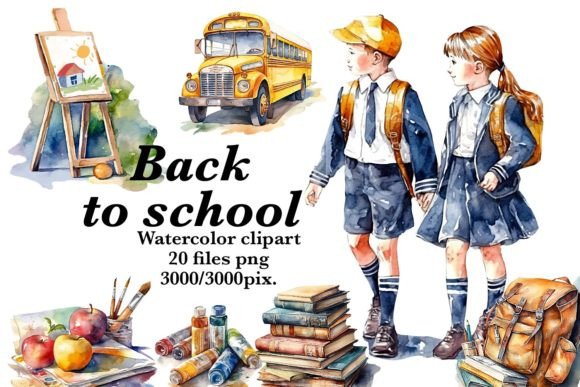
The distinction lies not just in style—but in execution and usability. The Back to School, Watercolor Clipart set includes 20 individual PNG files, each sized at 3000 × 3000 pixels and saved at 300 dpi with fully transparent backgrounds. That resolution supports sharp printing up to 10×10 inches without pixelation, while the transparency allows seamless integration into layered designs—whether you’re placing a watercolor backpack over a custom invitation background or overlaying a school bus onto a classroom banner.
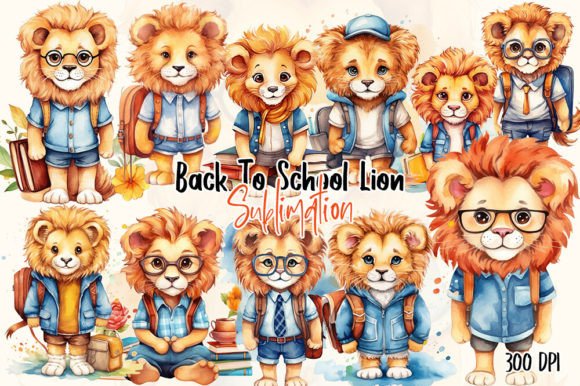
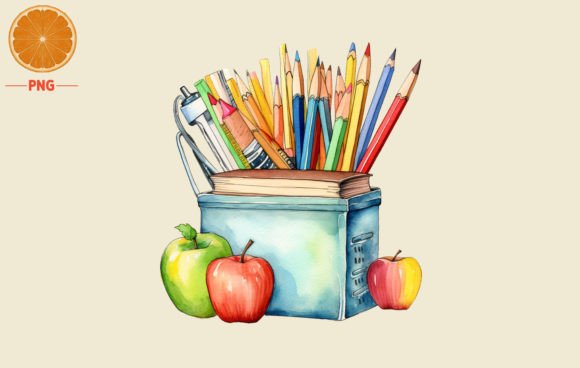
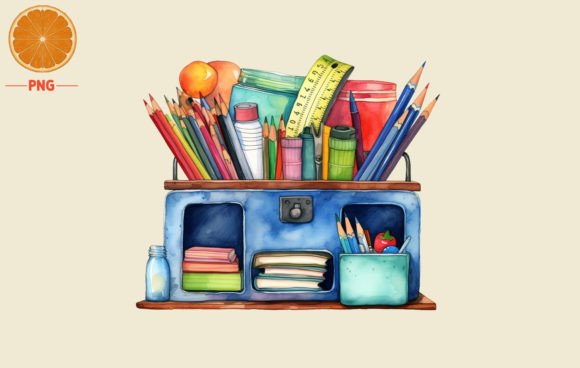
Subjects include diverse schoolchildren (in varied poses and attire), classic yellow school buses, chalkboards, apples, pencils, notebooks, and other classroom staples—all rendered with consistent color harmony and scale. Importantly, the watercolor treatment isn’t applied as a filter or overlay; it’s built into the original artwork. This means shadows, highlights, and texture behave naturally under resizing or color adjustments, unlike heavily stylized or AI-generated alternatives that often flatten or distort when edited.
How It Compares to Other Clipart Options
When evaluating digital clipart, users typically encounter three broad categories: vector-based, raster-based (non-watercolor), and hand-textured raster sets like this one. Vector clipart offers infinite scalability and clean editing but tends to feel clinical or overly polished—less suited for handmade invitations or cozy bulletin board displays. Standard raster clipart (often JPEG or low-res PNG) may lack transparency, suffer from compression artifacts, or offer inconsistent sizing—making layout work more time-consuming.
In contrast, the Back to School, Watercolor Clipart bridges fidelity and feeling. It delivers the precision of high-resolution raster files while retaining the expressive nuance of traditional media. Compared to broader “school theme” bundles that mix fonts, icons, and vectors haphazardly, this set maintains stylistic cohesion—a practical advantage when building a unified visual identity across multiple classroom materials.
Real-World Use Cases and Practical Fit
Educators preparing welcome packets or parent newsletters often need imagery that feels personal—not stock-photo sterile. A watercolor apple or child holding a book adds quiet sincerity to printed handouts. Similarly, small businesses creating limited-run back-to-school merchandise—like tote bags, greeting cards, or laminated reward charts—benefit from artwork that reads as thoughtful and intentional, not mass-produced.
For crafters using Cricut or Silhouette machines, the 300 dpi resolution and transparent backgrounds simplify cut-file preparation. Embroiderers digitizing designs appreciate the clear silhouette and minimal internal detail—watercolor softness translates well to stitch density without requiring excessive node cleanup. Scrapbookers find the scale consistency helpful: all elements align visually whether used large on a cover page or reduced for journaling spots.
That said, this set isn’t optimized for UI design, web banners, or animated content. Its strength is in print and physical crafts—not responsive layouts or motion graphics. If your priority is scalable SVGs for a teacher website or editable layers for collaborative design tools like Figma, a vector alternative would better serve that workflow.
Strengths and Tradeoffs to Consider
Strengths:
- Consistent watercolor aesthetic across all 20 images—no jarring stylistic shifts.
- No licensing restrictions for commercial use in physical products (e.g., printed posters, craft kits, or boutique stationery).
- Each file is self-contained: no need to extract layers or manage complex PSD files.
- Transparent backgrounds eliminate tedious background removal—saving time during production.
Tradeoffs:
- Limited to static imagery—no matching fonts, patterns, or animated variants included.
- Not customizable at the brushstroke level: you can adjust color saturation or brightness, but not rework individual pigment granulation.
- At 20 files, it’s focused rather than exhaustive—don’t expect seasonal variants (e.g., fall-themed leaves) or extended character sets (e.g., 50+ student poses).
- Watercolor subtlety may not translate strongly to very small-scale applications (e.g., 12-point digital labels), where bolder outlines often perform better.
When This Clipart Set Is the Right Choice
The Back to School, Watercolor Clipart is most appropriate when your goals emphasize authenticity, cohesion, and tangible output. It fits well if you’re:
- Designing printable classroom decor—such as name tags, behavior charts, or door signs—that will be laminated or framed.
- Producing small-batch physical goods for sale (e.g., handmade greeting cards, fabric-printed pencil cases, or embroidery kits).
- Building a branded resource library for a tutoring business or homeschool co-op where visual tone reinforces trust and care.
- Working offline or with limited software access—since PNGs open in virtually any image editor without plugins or subscription tools.
It also suits users who value predictability: knowing every file meets the same technical standard (size, DPI, transparency) reduces trial-and-error during layout. That reliability matters when deadlines are tight—like finalizing bulletin board materials the week before school starts.
When You Might Choose Something Else
If your project requires dynamic adaptability—such as generating dozens of personalized student certificates with variable names and photos—a template-based solution with smart objects or scripting support may be more efficient. Likewise, if you need accessibility features (e.g., alt-text-ready SVGs with semantic grouping), or require multi-language text integration directly into the graphics, a custom illustration commission or modular vector system could offer greater flexibility.
Similarly, educators relying heavily on interactive digital platforms—Google Slides templates, Canva presentations, or LMS-integrated visuals—may prefer assets already formatted as drag-and-drop elements with embedded animations or hyperlinks. While the Back to School, Watercolor Clipart can be imported into those tools, it won’t retain interactivity out of the box.
Making an Informed Decision
Before choosing any clipart resource, consider your end medium first, then your editing capacity, and finally your aesthetic priorities. The Back to School, Watercolor Clipart excels when those three align toward print-focused, hand-crafted, or emotionally resonant outcomes. Its value isn’t in quantity or automation—it’s in quiet consistency and tactile authenticity.
Compare sample files against your typical workflow: try placing one image into your usual design environment. Does it scale cleanly? Does the transparency interact as expected with your background colors? Does the watercolor grain hold up at your intended output size? These small tests reveal more than feature lists ever can.
Ultimately, the best clipart isn’t the one with the most files—it’s the one that reduces friction between idea and execution. For many teachers, makers, and small studios preparing for the new academic year, the Back to School, Watercolor Clipart provides that balance: professional-grade specs wrapped in a gentle, human-centered aesthetic.